


Introduction
Learning the Holy Quran begins with building a strong foundation in pronunciation, letter recognition, and reading skills. For children who are starting their Quran learning journey, Rehmani Qaida serves as an important first step because it introduces Arabic letters, pronunciation rules, and reading methods in a simple and structured way.
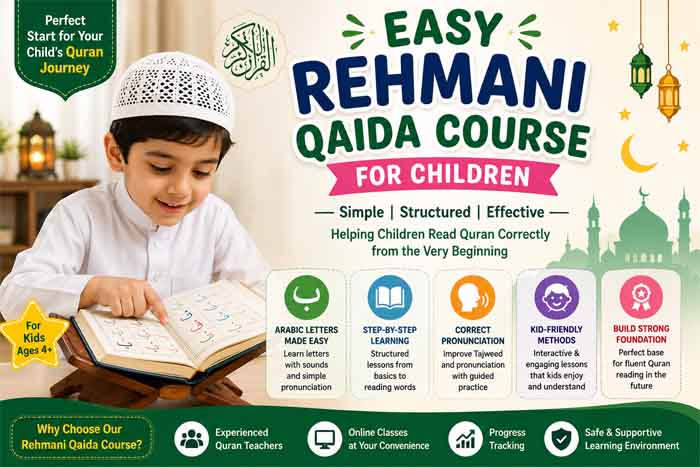
An easy Rehmani Qaida course for children helps young learners understand basic concepts gradually while creating confidence and interest in learning. Parents increasingly prefer structured Qaida courses because early learning experiences shape long-term understanding and motivation.
Modern Quran education focuses not only on memorization but also on understanding correct pronunciation and reading techniques from the beginning.
Understanding Rehmani Qaida
Rehmani Qaida is designed to help beginners develop essential Quran reading skills through progressive learning methods. Children first learn Arabic alphabets and gradually move toward word formation, pronunciation practice, and reading fluency.
The structured format makes learning easier because concepts are introduced slowly according to the learner’s ability. This gradual approach helps children feel comfortable while improving confidence.
Learning through organized lessons allows students to strengthen their foundation before moving toward advanced Quran reading.
Importance of Early Quran Learning for Children
Children learn new languages and sounds more effectively during early years. Introducing Quran education at a young age helps develop stronger pronunciation skills and better familiarity with Arabic letters.
Early learning also builds discipline, concentration, and positive study habits. Children who begin with structured Quran learning often develop stronger confidence when progressing toward Quran recitation.
Strong foundations during childhood contribute significantly to long-term learning success.
Why Choose an Easy Learning Approach ?
Children learn best when lessons are simple, interactive, and engaging. Complex teaching methods can create confusion and reduce motivation.
An easy learning approach focuses on gradual Best Online Rehmani Qaida Classes for Beginners progress, repetition, and child-friendly explanations. Short lessons combined with practice activities often improve retention and understanding.
Teachers who adapt lessons according to student pace usually achieve better learning outcomes.
Step-by-Step Learning Structure
A structured course typically begins with Arabic alphabet recognition. Children learn letter shapes, names, and sounds before moving toward joining letters and reading simple words.
Once basic recognition improves, students practice pronunciation and develop reading confidence through guided exercises.
Gradual progression prevents learners from feeling overwhelmed because new concepts build upon previous lessons.
Importance of Correct Pronunciation
Pronunciation plays an important role in Quran reading because proper articulation improves reading accuracy.
Children benefit from listening exercises, repetition, and guided correction while learning pronunciation rules.
Correct pronunciation habits developed early become valuable throughout future learning stages.
Interactive Learning Methods for Children
Children generally respond better to interactive learning experiences.
Visual aids, repetition activities, simple exercises, and engaging teaching methods increase attention and participation.
Interactive learning environments reduce boredom and help students remain focused during lessons.
Benefits of Online Rehmani Qaida Courses
Online learning has increased access to Quran education for many families.
Flexible schedules allow parents to arrange classes according to Professional Rehmani Qaida Learning Course Online daily routines. Students can learn from home environments where they often feel more comfortable.
Online courses also provide access to experienced teachers regardless of location.
Role of Parents in Supporting Learning
Parental involvement significantly influences learning success.
Parents who encourage practice sessions and maintain positive learning routines often help children progress more effectively.
Encouragement and patience contribute greatly toward maintaining motivation.
Building Confidence Through Consistent Practice
Practice strengthens learning outcomes because repetition improves familiarity and memory.
Short daily sessions generally produce Easy Quran Reading with Rehmani Qaida Lessons better results than irregular longer sessions.
Regular practice supports stronger long-term retention.
Developing Long-Term Quran Reading Skills
Rehmani Qaida acts as a foundation for future Quran education.
Strong basics help students transition toward fluent Quran reading with greater confidence.
Children who understand letters, pronunciation, and reading structures often progress more smoothly toward advanced studies.
Creating an Encouraging Learning Environment
Learning environments influence motivation significantly.
Supportive teachers, encouraging families, and comfortable study spaces help children remain focused and interested.
Reward systems and positive feedback improve engagement while reducing frustration.
Future Importance of Quran Education
As educational methods continue evolving, structured Quran learning programs remain important for developing foundational religious education.
Modern teaching methods increasingly combine traditional values with engaging educational approaches.
Conclusion
An easy Rehmani Qaida course for children provides structured, engaging, and supportive learning experiences that help young students build strong Quran reading foundations.
Through step-by-step lessons, interactive methods, and consistent practice, children develop confidence and improve reading skills gradually.
Parents and teachers play important roles in creating positive educational experiences that support long-term learning success and encourage lifelong connections with Quran education.
0 Comments