


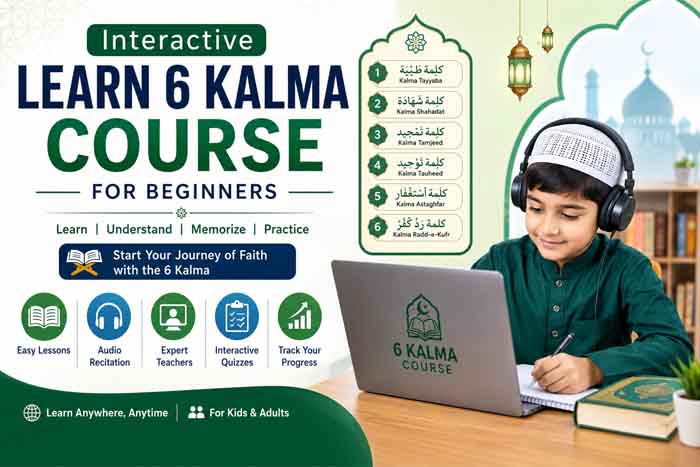
Introduction: The Foundation of Islamic Faith
The Six Kalmas hold a position of great importance in Islamic teachings, serving as the foundation of a Muslim's faith and belief. Every Muslim is encouraged to learn, understand, and practice these beautiful declarations from an early age. They strengthen belief in the Oneness of Allah, the Prophethood of Prophet Muhammad (peace be upon him), and the essential principles that guide a believer throughout life.
Learning the Six Kalmas should be more than simple memorization. A structured and engaging learning method helps students understand their meanings, importance, and practical value in everyday life. A Professional Learn 6 Kalma Course Online provides step-by-step guidance, interactive lessons, and experienced teachers who help learners develop confidence while mastering each Kalma with correct pronunciation.
Whether the learner is a child beginning Islamic education, an adult refreshing religious knowledge, or a new Muslim seeking a strong foundation, interactive learning makes the entire process enjoyable, effective, and meaningful.
What Are the Six Kalmas?
The Six Kalmas are beautiful declarations that summarize the fundamental beliefs of Islam. Each Kalma carries a unique spiritual message and teaches Muslims about faith, worship, repentance, and complete submission to Allah.
Kalma Tayyaba (The Pure Declaration)
This is the first and most important declaration of faith. It confirms that there is no god except Allah and that Prophet Muhammad (peace be upon him) is His Messenger. It forms the foundation of every Muslim's belief.
Kalma Shahadat (The Testimony)
This Kalma strengthens faith by declaring testimony to the Oneness of Allah and the Prophethood of Muhammad (peace be upon him). It reinforces the commitment every Muslim makes toward Islamic beliefs.
Kalma Tamjeed (The Glorification)
This Kalma glorifies Allah by acknowledging His greatness, perfection, and unlimited power. It reminds believers that Allah alone deserves all praise and honor.
Kalma Tauheed (The Oneness)
This declaration emphasizes the absolute Oneness of Allah and rejects every form of polytheism. It strengthens a Muslim's understanding of Tawheed and complete reliance upon Allah.
Kalma Astaghfar (Seeking Forgiveness)
This Kalma teaches Muslims to sincerely seek forgiveness from Allah for their mistakes and shortcomings. It encourages repentance, humility, and continuous self-improvement.
Kalma Radd-e-Kufr (Rejection of Disbelief)
The final Kalma expresses complete rejection of disbelief and false beliefs while reaffirming total commitment to the teachings of Islam.
The Importance of Learning the Six Kalmas
Every Muslim benefits from learning the Six Kalmas because they provide a strong spiritual foundation that supports Islamic education and daily worship.
Foundation of Islamic Belief
The Kalmas summarize the essential beliefs that every Muslim should understand and practice throughout life.
Connection with Daily Worship
The teachings found within the Kalmas strengthen daily prayers, supplications, and remembrance of Allah, making worship more meaningful.
Essential Learning for Children
Children who begin learning the Kalmas at an early age develop a stronger understanding of Islam while building confidence in Arabic pronunciation and Islamic values.
Strengthening Faith for Adults
Adults also benefit from revisiting the Six Kalmas to refresh their knowledge, deepen their understanding, and strengthen their relationship with Allah.
Why Interactive Learning Is More Effective ?
Modern educational methods have transformed Islamic learning by making lessons engaging, structured, and easier to understand. The Best Online Learn 6 Kalma Course for Kids and Adultscombines technology with authentic Islamic education to improve memorization, pronunciation, and comprehension.
Multimedia Learning
Students learn through audio recitations, visual presentations, Arabic text, translations, and interactive exercises that improve understanding and long-term memory.
Step-by-Step Progress
Instead of memorizing all six Kalmas at once, students learn one Kalma at a time through carefully planned lessons before progressing to the next level.
Regular Practice and Revision
Interactive quizzes, repetition exercises, and revision sessions help learners remember each Kalma more effectively while building confidence through continuous practice.
Key Features of an Effective Interactive Kalma Course
A well-designed interactive course provides much more than memorization. It combines structured lessons, practical exercises, and modern teaching techniques to help learners understand each Kalma with confidence and accuracy.
Audio and Visual Learning Support
High-quality audio recitations, synchronized Arabic text, and visual learning materials help students improve pronunciation while making memorization easier and more enjoyable.
Progress Tracking
Interactive courses allow learners and parents to monitor progress after every lesson. This helps identify areas that require additional practice and keeps students motivated throughout the course.
Gamified Learning Activities
Quizzes, rewards, achievement badges, and interactive exercises make Islamic learning exciting, especially for younger children who respond well to engaging educational activities.
Spaced Repetition
Regular revision sessions strengthen long-term memory by reviewing previously learned Kalmas at carefully planned intervals. This approach improves retention and reduces forgetting.
Meaning-Based Learning
Understanding the meaning behind every Kalma helps learners build a stronger spiritual connection rather than relying solely on memorization. Simple explanations make Islamic concepts easy for beginners to understand.
Self-Assessment Activities
Interactive quizzes and practice sessions allow students to test their knowledge, improve confidence, and measure their learning progress independently.
A Structured Learning Journey
A successful Kalma course follows a clear and organized learning path that gradually builds the student's knowledge and confidence.
Introduction and Orientation
The course begins by introducing the importance of the Six Kalmas, their role in Islam, and the learning objectives students will achieve throughout the program.
Individual Kalma Lessons
Each Kalma is taught separately with Arabic text, accurate pronunciation, English translation, explanation, and guided practice before introducing the next lesson.
Pronunciation Practice
Students practice correct Arabic pronunciation by listening to qualified instructors and repeating each Kalma multiple times until fluency improves.
Review and Revision
Regular review sessions combine all previously learned Kalmas into comprehensive practice exercises that reinforce memory and improve recitation skills.
Final Assessment
After completing all lessons, students participate in an assessment that evaluates memorization, pronunciation, and understanding of the Six Kalmas.
Benefits for Different Age Groups
Young Children
Colorful lessons, interactive activities, and engaging audio recordings make learning enjoyable while building a strong Islamic foundation at an early age.
Teenagers
Teenage students benefit from detailed explanations that strengthen their understanding of Islamic beliefs while encouraging them to practice the teachings of the Kalmas in daily life.
Adults
Busy adults can study at their own pace through flexible online lessons that fit their schedules. A Certified Learn 6 Kalma Course with Expert Quran Teachers provides personalized guidance that helps adult learners improve pronunciation and deepen their understanding of Islamic teachings.
New Muslims
Interactive lessons provide a simple and supportive learning environment for new Muslims, helping them build confidence while learning the essential foundations of Islam.
The Role of Parents and Teachers
Encouraging Daily Practice
Parents and teachers should encourage short but consistent practice sessions every day to improve memorization and pronunciation.
Explaining the Meanings
Discussing the meanings and importance of each Kalma helps learners develop a stronger spiritual connection and appreciate the wisdom behind Islamic teachings.
Monitoring Progress
Regular progress reviews help identify areas where learners need additional support while motivating them to continue improving.
Creating a Positive Learning Environment
A peaceful, encouraging, and supportive learning atmosphere increases confidence, reduces anxiety, and makes the educational journey more enjoyable for students of every age.
Common Challenges Beginners Face
Learning the Six Kalmas is a rewarding journey, but many beginners experience challenges during the learning process. Interactive learning methods help overcome these obstacles by making lessons engaging, structured, and easy to understand.
Difficulty with Arabic Pronunciation
Many beginners find Arabic pronunciation challenging because they are unfamiliar with the sounds and pronunciation rules. Interactive audio lessons, repeated recitation, and teacher guidance help students pronounce every word correctly and confidently.
Loss of Interest During Learning
Traditional memorization methods can sometimes become repetitive, especially for children. Interactive activities, quizzes, colorful learning materials, and engaging exercises keep learners motivated throughout the course.
Memorization Difficulties
Remembering all six Kalmas can seem overwhelming for beginners. Structured repetition, regular revision sessions, and step-by-step learning make memorization much easier while improving long-term retention.
Understanding the Meaning
Many students successfully memorize the Kalmas but struggle to understand their meanings. Interactive courses explain every Kalma in simple language so learners can build a stronger connection with their faith while understanding the message behind each declaration.
Why Online Interactive Learning Is the Best Choice ?
Modern online Islamic education provides flexibility, convenience, and personalized learning for students of every age. Learners can study from home while receiving guidance from experienced Quran teachers without compromising educational quality.
- Flexible class schedules for children and adults.
- One-to-one learning with qualified Quran teachers.
- Interactive audio and visual learning resources.
- Easy-to-follow lessons designed for beginners.
- Regular assessments to measure learning progress.
- Improved pronunciation through expert guidance.
- Meaning-based Islamic education.
- Safe and comfortable online learning environment.
Building a Strong Islamic Foundation
Learning the Six Kalmas is one of the first and most important steps in every Muslim's Islamic education. These beautiful declarations strengthen faith, encourage sincere worship, and help Muslims understand the core beliefs of Islam.
Through consistent practice, proper pronunciation, and understanding of their meanings, students develop confidence in their religious knowledge while building habits that support lifelong Islamic learning. Interactive lessons also encourage learners to apply these teachings in their daily lives with sincerity and devotion.
Conclusion
The Six Kalmas form the foundation of Islamic belief and serve as an essential part of every Muslim's spiritual journey. Learning them through an interactive approach transforms memorization into an enjoyable and meaningful educational experience for children, adults, and new Muslims alike.
By combining multimedia learning, qualified teachers, structured lessons, pronunciation practice, and meaning-based explanations, interactive courses help students develop confidence while strengthening their understanding of Islam. With regular practice and proper guidance, learners can successfully memorize, understand, and apply the teachings of the Six Kalmas, creating a strong foundation for lifelong Islamic knowledge and spiritual growth.
0 Comments