


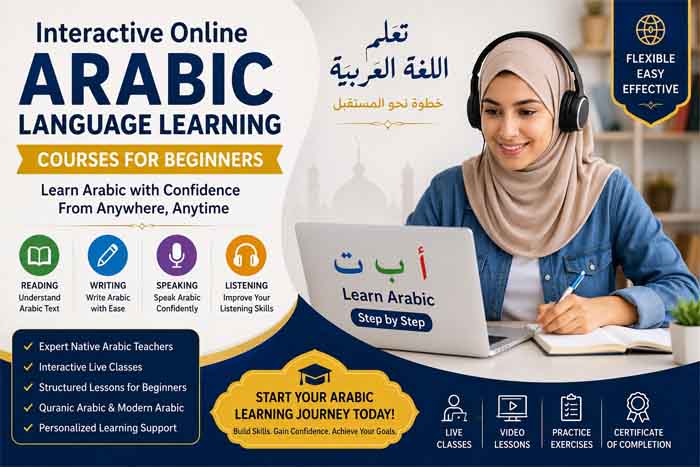
Building a Strong Foundation in the Arabic Language
Arabic is one of the most widely spoken languages in the world and holds great cultural, religious, academic, and professional significance. Millions of people choose to learn Arabic every year to improve communication skills, understand Islamic texts, advance their careers, or connect with Arabic-speaking communities. Thanks to modern technology, learning Arabic has become more accessible than ever through interactive online courses designed specifically for beginners.
Interactive online Arabic language learning courses provide students with a flexible and engaging way to develop reading, writing, listening, and speaking skills. Unlike traditional classroom environments, online learning platforms allow students to study from anywhere while benefiting from structured lessons, experienced instructors, and modern educational resources.
For beginners, starting with the right learning approach is essential. A strong foundation helps students build confidence, understand core language concepts, and progress toward fluency more effectively. Interactive learning methods make the process enjoyable while ensuring steady development of language skills.
Understanding the Importance of Learning Arabic
Arabic is spoken by hundreds of millions of people across numerous countries and plays a significant role in global communication. It is one of the most influential languages in history and continues to impact business, education, diplomacy, and religious studies.
Learning Arabic provides numerous benefits, including:
- Improved communication skills
- Better career opportunities
- Enhanced cultural understanding
- Access to Arabic literature
- Stronger religious knowledge
- International networking opportunities
As globalization continues to connect people from different backgrounds, Arabic language skills have become increasingly valuable. Students who learn Arabic gain access to a rich linguistic and cultural heritage that opens doors to personal and professional growth.
Many students begin their language journey through Professional Arabic Reading Writing and Speaking Classes Online, which focus on building practical communication skills while strengthening understanding of grammar and vocabulary.
Creating an Engaging Learning Experience
One of the biggest challenges language learners face is maintaining motivation. Interactive online courses solve this problem by creating engaging learning experiences that encourage active participation.
Modern Arabic learning programs often include:
- Live instructor-led classes
- Interactive exercises
- Audio pronunciation lessons
- Video tutorials
- Virtual discussions
- Practice quizzes
- Real-world conversations
These tools help students remain engaged throughout their learning journey. Interactive activities encourage participation and improve retention by allowing learners to apply new concepts immediately.
When students actively engage with lessons rather than simply memorizing information, they develop stronger language skills and greater confidence in using Arabic in everyday situations.
Developing Reading Skills from the Beginning
Reading is one of the most important components of Arabic language learning. Beginners typically start by learning the Arabic alphabet and understanding how letters connect to form words.
Arabic script may appear challenging at first, but structured instruction makes it easier to understand and master. Students gradually learn letter recognition, pronunciation, word formation, and sentence construction through guided exercises and practice activities.
Reading skills provide a foundation for all other language abilities. As students become comfortable reading Arabic text, they gain access to books, articles, educational resources, and authentic Arabic content.
Interactive courses often use visual aids and step-by-step lessons to simplify the learning process and help beginners progress at a comfortable pace.
Strengthening Writing Abilities Through Practice
Writing is another essential skill that supports overall language development. Learning to write Arabic helps students understand letter structures, spelling patterns, grammar rules, and sentence organization.
Effective writing instruction includes:
- Letter formation exercises
- Vocabulary practice
- Sentence construction activities
- Grammar application tasks
- Creative writing exercises
Regular writing practice improves memory retention and strengthens understanding of language concepts. Students gradually develop the ability to express thoughts and ideas clearly using Arabic.
Through consistent practice and instructor feedback, learners build confidence in their writing abilities while improving overall language proficiency.
Improving Pronunciation and Speaking Confidence
Speaking is often one of the most exciting aspects of language learning because it allows students to communicate directly with others. Many beginners initially feel nervous about speaking Arabic, but interactive courses provide supportive environments where learners can practice without fear.
Speaking-focused lessons help students:
- Develop accurate pronunciation
- Build conversational skills
- Improve listening comprehension
- Increase communication confidence
- Expand vocabulary usage
Live interactions with instructors and classmates provide valuable opportunities to practice speaking in realistic situations. Students gradually become more comfortable using Arabic in conversations and everyday communication.
A highly effective option for language development is Interactive Online Arabic Language Learning Courses for Beginners and Intermediate Students, which combine structured lessons with practical speaking activities to accelerate language acquisition.
Expanding Vocabulary for Everyday Communication
Vocabulary is the building block of language fluency. The more words students understand, the easier it becomes to communicate effectively in different situations.
Interactive Arabic courses introduce vocabulary gradually through thematic lessons covering topics such as:
- Family and relationships
- Daily routines
- Education
- Travel
- Food and dining
- Business communication
- Social interactions
Context-based learning helps students remember words more effectively because vocabulary is introduced within meaningful situations rather than isolated lists.
Regular practice activities reinforce new vocabulary and encourage active usage during conversations, writing assignments, and reading exercises.
Understanding Grammar Without Complexity
Arabic grammar is known for its structure and precision. While grammar may seem intimidating to beginners, effective instruction simplifies complex concepts and presents them in manageable steps.
Students learn essential topics such as:
- Nouns and verbs
- Sentence structure
- Gender rules
- Verb conjugation
- Pronouns
- Prepositions
- Question formation
Interactive learning platforms often use visual explanations, examples, and practical exercises to make grammar easier to understand.
When grammar is taught gradually and applied through real-life examples, students gain confidence in constructing accurate sentences and communicating more effectively.
Learning Quranic and Modern Arabic Together
Many students choose to learn Arabic for religious purposes while also seeking practical communication skills. Combining Quranic Arabic with Modern Standard Arabic provides a balanced learning experience that supports multiple goals.
Quranic Arabic helps students understand Quranic vocabulary, improve Islamic studies, strengthen religious knowledge, and connect with classical Arabic texts.
Modern Standard Arabic supports everyday communication, academic learning, professional development, and media comprehension.
Many learners prefer a Comprehensive Quranic Arabic and Modern Arabic Learning Program because it combines religious understanding with practical communication skills.
Flexibility and Convenience for Modern Learners
One of the greatest advantages of online Arabic learning is flexibility. Students can access lessons from home, work, or any location with an internet connection.
- Flexible scheduling
- Personalized study plans
- Recorded lessons
- Global instructor access
- Self-paced learning opportunities
- Continuous progress tracking
This flexibility makes language education accessible to students with busy schedules, family responsibilities, or geographic limitations.
Supporting Long-Term Language Development
Learning Arabic is a long-term journey that requires dedication and consistent practice. Interactive online courses support sustained progress by providing structured learning paths, regular assessments, and ongoing guidance.
Successful language learners often develop better communication skills, improved memory retention, greater cultural awareness, enhanced critical thinking, and increased confidence.
As students advance, they gain the ability to participate in conversations, understand authentic content, and communicate effectively in a variety of settings.
Conclusion
Interactive online Arabic language learning courses for beginners provide an effective and accessible pathway to mastering one of the world's most important languages. Through engaging lessons, structured instruction, live interactions, and practical exercises, students develop essential reading, writing, listening, and speaking skills.
Whether the goal is personal growth, career advancement, cultural exploration, or religious understanding, Arabic language education offers valuable opportunities for lifelong learning. By combining modern technology with expert instruction, online Arabic courses help students achieve fluency while enjoying a flexible and supportive learning experience.
As demand for Arabic language skills continues to grow globally, investing in professional online education remains one of the most effective ways to build confidence, expand opportunities, and connect with the rich heritage of the Arabic-speaking world.
0 Comments