


Introduction
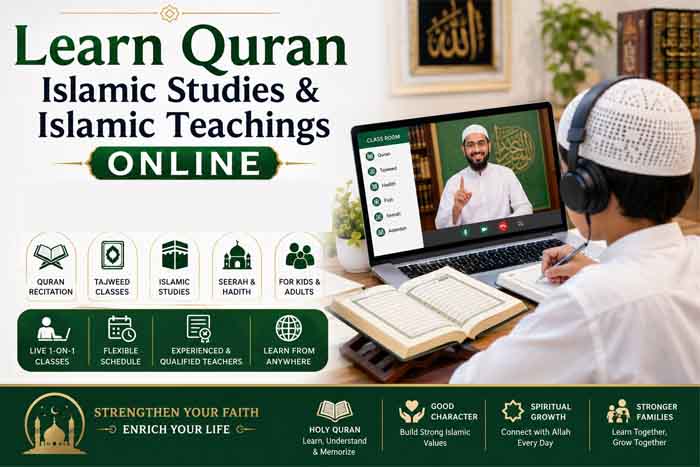
In today's fast-paced digital world, acquiring authentic Islamic knowledge has become easier and more accessible than ever before. Muslims around the globe now have the opportunity to learn Quran, Islamic studies, and Islamic teachings online from qualified teachers without geographical limitations. Online Islamic education has transformed the way students, children, adults, and families connect with their faith, making quality Islamic learning available from the comfort of their homes.
Learning Islam is not simply about gaining information; it is about understanding the guidance of Allah, strengthening faith, improving character, and implementing Islamic principles in daily life. Through structured online Islamic education programs, students can develop a deeper understanding of the Quran, Hadith, Fiqh, Seerah, Aqeedah, and Islamic ethics while maintaining their personal, academic, and professional responsibilities.
As technology continues to evolve, online Islamic learning platforms provide flexible and effective opportunities for Muslims to pursue religious education while balancing modern lifestyles. Whether someone is a beginner or an advanced student, online Islamic studies programs offer comprehensive learning experiences designed to nurture spiritual growth and lifelong understanding.
The Importance of Learning the Quran
The Holy Quran is the final revelation from Allah and serves as a complete guide for humanity. Learning the Quran is one of the most important responsibilities for every Muslim because it provides divine guidance for all aspects of life.
Studying the Quran helps individuals understand the purpose of their existence, strengthen their relationship with Allah, and develop a clear understanding of Islamic values. The Quran contains lessons on faith, worship, morality, justice, compassion, family life, and social responsibilities. Every verse offers wisdom that helps believers navigate life's challenges while remaining connected to their Creator.
Online Quran learning programs provide students with opportunities to learn proper recitation, Tajweed rules, memorization techniques, and Quranic understanding under the supervision of qualified instructors. This structured approach helps learners build confidence and develop strong Quranic foundations.
Understanding Islamic Studies
Islamic studies encompass a wide range of subjects that help Muslims understand their religion comprehensively. While Quran learning is central to Islamic education, students also benefit from studying Hadith, Fiqh, Aqeedah, Seerah, Islamic history, and Islamic ethics.
Islamic studies provide context for understanding the teachings of Islam and their practical application in everyday life. Through these subjects, students gain insights into the teachings of Prophet Muhammad (peace be upon him), the development of Islamic civilization, and the principles that guide Muslim conduct.
Comprehensive Islamic education encourages critical thinking, moral development, and spiritual awareness. It helps learners appreciate the depth and richness of Islamic scholarship while strengthening their commitment to practicing Islam correctly.
Benefits of Online Islamic Education
Online Islamic education offers numerous advantages that make learning more accessible and convenient for students worldwide. Traditional barriers such as distance, transportation, scheduling conflicts, and limited local resources no longer prevent individuals from accessing quality Islamic instruction.
Students can attend classes from any location while choosing schedules that fit their daily routines. This flexibility is particularly beneficial for working professionals, university students, parents, and families seeking consistent Islamic education.
Many online learning platforms provide one-on-one sessions, interactive classrooms, recorded lessons, and personalized learning plans. These features help students progress at their own pace while receiving individual attention from experienced teachers.
Institutions offering Comprehensive Online Islamic Education Courses for Students and Families focus on creating engaging learning environments that support academic excellence and spiritual growth simultaneously.
Learning Quran with Tajweed
Proper Quran recitation requires knowledge of Tajweed, the set of rules governing pronunciation and articulation. Tajweed ensures that every letter is pronounced correctly and that the Quran is recited as it was revealed.
Learning Tajweed improves recitation quality and helps students avoid common pronunciation errors. Qualified Quran teachers guide students through letter recognition, articulation points, elongation rules, and recitation techniques that enhance fluency and accuracy.
Online Quran classes often utilize advanced learning tools, audio exercises, visual demonstrations, and personalized feedback to help students master Tajweed effectively. These resources make learning easier while maintaining high educational standards.
Memorization of the Holy Quran
Memorizing the Quran is a noble and rewarding achievement that brings numerous spiritual benefits. Many Muslims aspire to become Hafiz or Hafiza by committing the Quran to memory and preserving its teachings in their hearts.
Online Quran memorization programs provide structured methodologies that help students achieve their memorization goals gradually and effectively. Teachers monitor progress, review memorized portions, and provide motivation throughout the learning journey.
Consistent practice, proper revision techniques, and personalized guidance enable students to strengthen retention while maintaining accuracy. Online programs make Quran memorization accessible for children, teenagers, and adults regardless of their location.
Learning Islamic Teachings for Daily Life
Islam is a complete way of life that provides guidance for personal behavior, family relationships, social interactions, business ethics, and spiritual development. Learning Islamic teachings helps Muslims implement these principles in practical and meaningful ways.
Islamic education emphasizes honesty, kindness, patience, humility, respect, generosity, and responsibility. These values contribute to strong character development and positive contributions to society.
Students studying Islamic teachings gain practical knowledge that helps them make ethical decisions, strengthen relationships, and maintain balance between worldly responsibilities and spiritual obligations.
Programs focused on Learn Quran Islamic Studies and Islamic Teachings Online help learners understand how Islamic principles can be applied effectively in modern environments while preserving authentic religious values.
The Role of Qualified Islamic Teachers
The quality of Islamic education depends significantly on the knowledge, experience, and teaching abilities of instructors. Qualified Islamic teachers provide authentic guidance based on reliable Islamic sources and established scholarly traditions.
Experienced teachers help students understand complex concepts, answer questions, correct misunderstandings, and provide personalized support. Their mentorship encourages confidence, consistency, and deeper engagement with Islamic studies.
Online learning platforms carefully select instructors who possess strong academic qualifications, Quranic expertise, and effective communication skills. This ensures that students receive accurate and beneficial Islamic knowledge.
Islamic Education for Children
Children represent the future of the Muslim Ummah, making Islamic education during early years especially important. Teaching children about Islam helps establish strong foundations of faith, character, and identity.
Online Islamic classes for children are designed to be engaging, interactive, and age-appropriate. Lessons often include stories from the Quran, Seerah activities, memorization exercises, and character-building discussions that encourage active participation.
Parents appreciate the convenience and flexibility of online learning because it allows children to receive quality Islamic instruction without disrupting school schedules or family routines.
Professional institutions offering Professional Islamic Education Programs for Children and Adults focus on creating supportive learning environments that inspire curiosity, confidence, and love for Islam.
Islamic Education for Adults
Many adults seek Islamic education to strengthen their understanding of faith, improve worship practices, and answer important religious questions. Online learning provides flexible opportunities for adults to pursue Islamic studies regardless of their professional or family commitments.
Adult learners often appreciate structured courses that address practical aspects of Islamic living while exploring deeper theological and historical topics. These programs help participants gain confidence in their religious knowledge and practice.
Whether studying Quran recitation, Islamic jurisprudence, or prophetic traditions, adult learners benefit from personalized instruction that accommodates their unique educational goals and schedules.
Building Strong Muslim Families Through Education
Islamic education plays a vital role in strengthening family relationships and creating positive home environments. Families that learn together often develop stronger spiritual connections and shared values.
Online Islamic learning programs encourage family participation by providing courses suitable for different age groups and educational backgrounds. Parents can learn alongside their children, reinforcing lessons and fostering meaningful discussions at home.
Shared Islamic learning experiences contribute to stronger communication, mutual understanding, and greater commitment to Islamic principles within the family unit.
Technology and the Future of Islamic Learning
Technology continues to revolutionize education, including Islamic studies. Interactive learning platforms, virtual classrooms, digital libraries, and educational applications have expanded access to authentic Islamic knowledge.
Students can now connect with qualified scholars and teachers from around the world while benefiting from modern educational tools that enhance understanding and engagement. These innovations support more effective learning experiences while maintaining traditional Islamic educational values.
As technology advances, online Islamic education will continue providing innovative solutions that help Muslims access quality instruction regardless of geographical limitations.
Personal and Spiritual Development Through Islamic Studies
Islamic education contributes significantly to personal growth and spiritual development. Learning about Allah, the Quran, and the teachings of Prophet Muhammad (peace be upon him) strengthens faith and encourages self-improvement.
Students develop greater awareness of their responsibilities, improve their worship practices, and cultivate positive character traits. This transformation extends beyond academic achievement and influences every aspect of life.
Islamic studies encourage reflection, gratitude, patience, perseverance, and trust in Allah. These qualities help individuals navigate challenges while maintaining strong spiritual foundations.
Conclusion
Learning Quran Islamic Studies and Islamic Teachings Online provides valuable opportunities for Muslims to strengthen their faith, expand their knowledge, and improve their understanding of Islam. Through comprehensive educational programs, students gain access to qualified teachers, flexible schedules, and authentic Islamic instruction that supports both spiritual and personal development.
As online education continues to grow, more Muslims can benefit from convenient and effective learning experiences that connect them with the Quran and Islamic teachings. Whether the goal is Quran recitation, memorization, Islamic studies, or character development, online Islamic education offers a pathway to lifelong learning and deeper faith. By investing in authentic Islamic knowledge, individuals and families can build stronger spiritual foundations and contribute positively to their communities while seeking the pleasure of Allah.
0 Comments